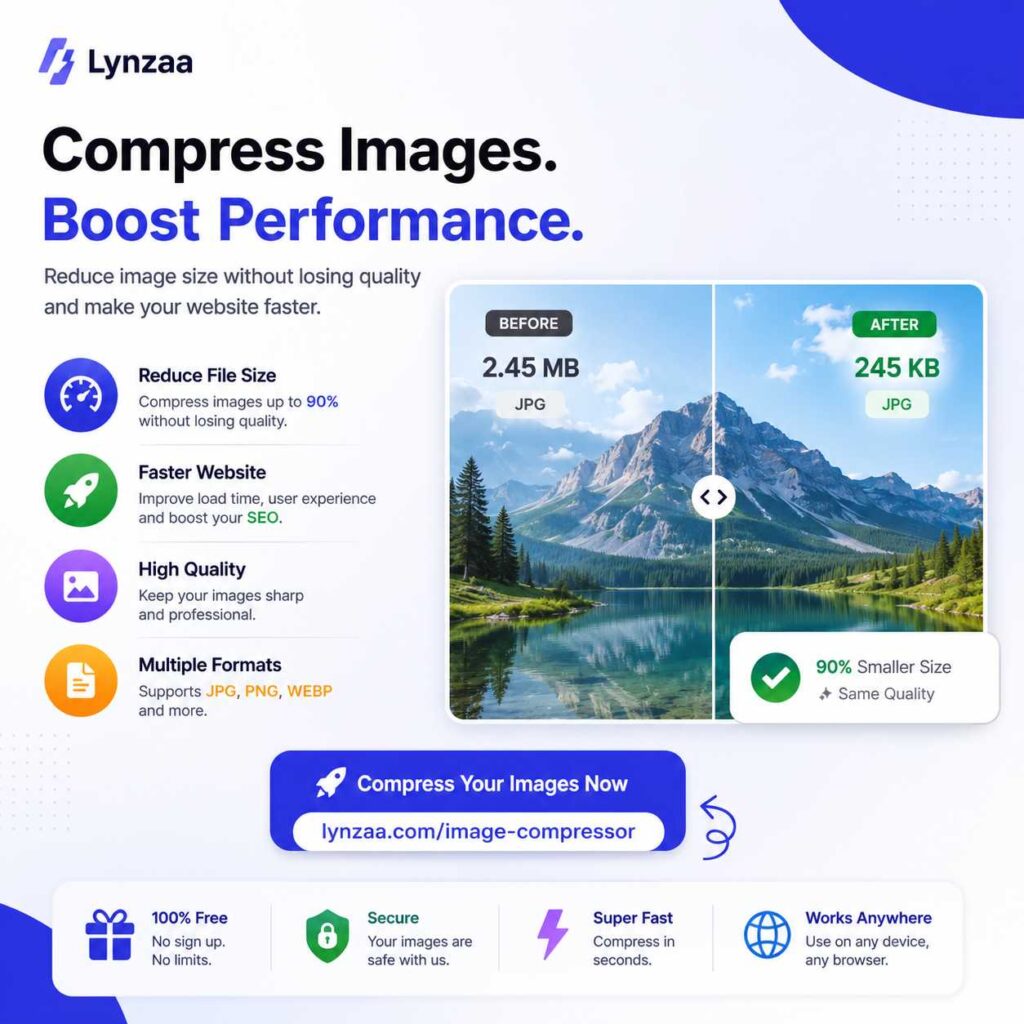
Why Image Compression Is Essential for Every Website in 2026
Website speed has become one of the most important factors for online success. Whether you’re running a personal blog, an eCommerce store, a business website, or a portfolio, visitors expect pages to load almost instantly. Even a few extra seconds of waiting can lead to lost traffic, lower engagement, and reduced conversions.
One of the most common causes of slow websites is oversized images. High-resolution visuals make content more attractive, but they can also dramatically increase page load times if they aren’t optimized properly.
This is where image compression becomes a game changer. By reducing image file sizes without noticeably affecting quality, website owners can deliver faster experiences, improve search rankings, and reduce bandwidth usage. Tools like Lynzaa Image Compressor make this process simple, fast, and accessible for everyone.
Understanding Image Compression
Image compression is the process of reducing the amount of data stored inside an image file. The goal is to create a smaller file that loads faster while maintaining an acceptable level of visual quality.
There are two primary compression methods used across the web:
Lossless Compression
Lossless compression reduces file size while preserving all original image data. This means the image quality remains virtually unchanged after compression.
Ideal for:
- Logos
- Icons
- Graphics
- PNG images
- Professional design assets
Lossy Compression
Lossy compression removes non-essential image information to achieve much greater file size reductions. Modern compression algorithms are smart enough to minimize visible quality loss while significantly improving performance.
Best suited for:
- Website images
- Blog post visuals
- Social media graphics
- Product photographs
- Marketing banners
The objective is simple: smaller files that still look great.
Why Large Images Slow Down Websites
Many website owners upload images directly from cameras, smartphones, or design software without optimizing them first. While these files may look fantastic, they often contain far more data than a website actually needs.
Here are the biggest problems caused by oversized images:
1. Slower Page Loading Times
Large image files take longer to download and display. Every extra second of loading time increases the likelihood that visitors will leave before the page fully loads.
2. Lower Search Engine Rankings
Search engines prioritize user experience, and page speed is a major ranking signal. Faster websites often perform better in search results than slower competitors.
Optimized images can contribute directly to:
- Improved page speed
- Better Core Web Vitals
- Enhanced mobile performance
- Stronger SEO visibility
3. Higher Bounce Rates
Visitors expect speed. If a page feels slow, many users will leave without exploring the rest of the website, increasing bounce rates and reducing engagement.
4. Increased Hosting and Bandwidth Costs
Heavy image files consume more server resources and bandwidth. Websites with significant traffic can end up paying more simply because images haven’t been optimized.
5. Poor Mobile Experience
Not every user has access to high-speed internet. Mobile visitors often rely on slower connections, making image optimization even more important.
Benefits of Using Lynzaa Image Compressor
Lynzaa Image Compressor was designed to help website owners optimize images quickly without complicated settings or technical knowledge.
Fast Processing
Images can be compressed within seconds, allowing users to optimize files and download the results almost immediately.
Excellent Visual Quality
The tool focuses on maintaining image clarity while significantly reducing file size, ensuring your visuals remain professional.
Multiple Format Support
- JPG
- PNG
- WEBP
This flexibility makes it useful for nearly any website project.
Completely Free
Users can compress images online without subscriptions, hidden fees, or complicated registration requirements.
Easy for Beginners
The interface is simple and intuitive, making image optimization accessible even for non-technical users.
SEO-Friendly Performance
Faster-loading images contribute to improved website speed, which can positively impact search rankings and user experience.
Works Everywhere
Whether you’re using a desktop computer, laptop, tablet, or smartphone, the compressor works directly from your browser.
How to Compress Images in Four Simple Steps
- Open the Lynzaa Image Compressor.
- Upload the image you want to optimize.
- Allow the tool to process and compress the file.
- Download the optimized version instantly.
The entire process usually takes less than a minute.
Image Optimization Best Practices
Compression is only one part of an effective image optimization strategy. Combining it with a few best practices can dramatically improve website performance.
Choose the Correct Format
JPG: Best for photographs and blog images.
PNG: Ideal for transparency, logos, and graphics.
WEBP: Excellent for modern websites thanks to superior compression efficiency.
Resize Before Uploading
Avoid uploading massive images when your website only displays them at smaller dimensions. Resizing first eliminates unnecessary data.
Use SEO-Friendly File Names
Descriptive file names help search engines understand image content.
Instead of:
IMG_001.jpg
Use:
website-speed-optimization.jpg
Add Meaningful Alt Text
Alt text improves accessibility and helps search engines understand image content.
Example:
Compressed website banner optimized using Lynzaa Image Compressor.
Compress Every Image
Even small file size reductions can create noticeable improvements when applied across an entire website.
How Image Compression Supports SEO
Modern SEO goes beyond keywords and backlinks. Search engines increasingly reward websites that provide fast, smooth, and user-friendly experiences.
Image optimization contributes directly to:
- Faster page loading speeds
- Improved mobile usability
- Better Core Web Vitals scores
- Higher user engagement
- More efficient crawling and indexing
As competition online continues to grow, these performance advantages become increasingly valuable.
Who Can Benefit from Image Compression?
Image optimization isn’t limited to developers. Nearly anyone who publishes content online can benefit.
- Bloggers improving page speed and SEO.
- Designers reducing file sizes while preserving quality.
- Developers optimizing website performance.
- Online store owners accelerating product pages.
- Freelancers improving client websites.
- Students and educators managing and sharing files more efficiently.
Common Image Optimization Mistakes
Avoid these common errors:
- Uploading original camera files directly to websites.
- Ignoring mobile users and slower connections.
- Choosing the wrong image format.
- Applying excessive compression that damages quality.
- Skipping filenames and alt text optimization.
The Future of Website Performance
As internet users continue demanding faster experiences, image optimization will become even more important. Search engines are placing greater emphasis on performance metrics, mobile usability, and user satisfaction.
Modern formats such as WEBP are rapidly becoming standard, and efficient image compression tools are now considered essential components of any website optimization strategy.
Businesses that prioritize image optimization today will be better positioned to compete in tomorrow’s increasingly performance-focused web.
Final Thoughts
Images make websites more engaging, visually appealing, and effective at communicating information. However, large image files can quietly undermine performance, SEO, and user experience.
Compressing images is one of the easiest and most impactful improvements any website owner can make. By reducing file sizes while preserving quality, you can create faster pages, happier visitors, and stronger search visibility.
Whether you’re a blogger, developer, designer, freelancer, or business owner, integrating image compression into your workflow can help you build a faster, more professional, and more competitive website.
Start optimizing your images today and experience the difference that proper compression can make.