In today’s connected world, businesses no longer rely solely on traditional advertising methods such as newspapers, billboards, radio, or television. The internet has transformed the way companies reach customers, creating countless opportunities to promote products and services online. This modern approach is known as digital marketing.
Whether you run a small business, manage an online store, or want to start a career in marketing, understanding digital marketing is essential. It helps businesses connect with the right audience, build brand awareness, increase website traffic, generate leads, and boost sales.
In this comprehensive guide, you’ll learn what digital marketing is, how it works, its main types, benefits, challenges, and why it has become one of the most important business strategies in the digital age.
What Is Digital Marketing?
Digital marketing refers to the promotion of products, services, or brands using digital channels and internet-based technologies. These channels include search engines, websites, social media platforms, email, mobile apps, and online advertising networks.
Unlike traditional marketing, digital marketing allows businesses to communicate directly with their target audience, track user behavior, and measure campaign performance in real time.
For example, when a company runs an advertisement on Google, publishes content on Facebook, sends promotional emails, or optimizes its website for search engines, it is practicing digital marketing.
Why Is Digital Marketing Important?
The internet has become an essential part of everyday life. Millions of people use search engines, social media platforms, and mobile devices daily to find information, compare products, and make purchasing decisions.
Digital marketing allows businesses to meet customers where they already spend their time online.
Some key reasons digital marketing is important include:
- Reach a global audience.
- Target specific customer groups.
- Generate measurable results.
- Build long-term customer relationships.
- Increase brand visibility.
- Improve return on investment (ROI).
- Compete effectively with larger companies.
Even small businesses with limited budgets can use digital marketing to grow their online presence and attract potential customers.
How Digital Marketing Works
Digital marketing works by using various online channels to attract, engage, and convert potential customers.
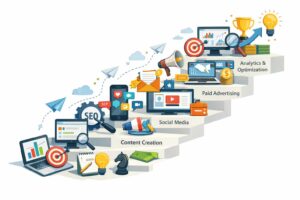
A typical digital marketing process includes:
- Identifying a target audience.
- Creating valuable content.
- Promoting content through digital channels.
- Driving traffic to a website or landing page.
- Converting visitors into leads or customers.
- Analyzing campaign performance.
- Optimizing future marketing efforts.
Businesses use data analytics tools to monitor user interactions and improve marketing strategies based on actual performance metrics.
Main Types of Digital Marketing
1. Search Engine Optimization (SEO)
SEO is the process of optimizing a website to rank higher in search engine results pages. The goal is to attract organic traffic from users searching for relevant information, products, or services.
SEO involves:
- Keyword research.
- Content optimization.
- Technical website improvements.
- Link building.
- User experience enhancement.
For example, if someone searches for “best running shoes,” websites optimized for that keyword have a better chance of appearing in search results.
2. Content Marketing
Content marketing focuses on creating and sharing valuable information that attracts and educates a target audience.
Common content formats include:
- Blog posts.
- Articles.
- Videos.
- Infographics.
- Podcasts.
- Guides and tutorials.
High-quality content helps build trust, improve SEO performance, and encourage customer engagement.
3. Social Media Marketing
Social media marketing involves promoting a brand through platforms such as Facebook, Instagram, LinkedIn, X (formerly Twitter), Pinterest, and TikTok.
Businesses use social media to:
- Increase brand awareness.
- Engage with followers.
- Share content.
- Run advertising campaigns.
- Provide customer support.
A strong social media presence can significantly influence purchasing decisions and customer loyalty.
4. Pay-Per-Click Advertising (PPC)
PPC advertising allows businesses to display ads on search engines and other websites. Advertisers pay only when users click on their ads.
Popular PPC platforms include:
- Google Ads.
- Microsoft Advertising.
- Facebook Ads.
- LinkedIn Ads.
PPC campaigns can deliver immediate traffic and are highly effective when properly targeted.
5. Email Marketing
Email marketing remains one of the most effective digital marketing channels.
Companies use email campaigns to:
- Promote products.
- Share updates.
- Send newsletters.
- Nurture leads.
- Encourage repeat purchases.
Personalized emails often achieve higher engagement rates and stronger customer relationships.
6. Affiliate Marketing
Affiliate marketing is a performance-based strategy where individuals or businesses earn commissions by promoting another company’s products or services.
Affiliates receive a unique tracking link and earn money when users complete desired actions such as purchases or registrations.
7. Influencer Marketing
Influencer marketing involves partnering with individuals who have established audiences on social media platforms.
Influencers can help brands:
- Reach targeted audiences.
- Build credibility.
- Increase engagement.
- Generate sales.
This strategy is particularly popular in industries such as fashion, beauty, fitness, and technology.
8. Mobile Marketing
Mobile marketing focuses on reaching users through smartphones and tablets.
Examples include:
- Mobile-friendly websites.
- SMS campaigns.
- Push notifications.
- Mobile app advertising.
- Location-based marketing.
Since mobile devices account for a significant portion of internet usage, mobile optimization is crucial.
Benefits of Digital Marketing
Digital marketing offers numerous advantages compared to traditional marketing methods.
Cost-Effective
Many digital marketing strategies require lower budgets than television, radio, or print advertising.
Measurable Results
Businesses can track impressions, clicks, conversions, and revenue using analytics tools.
Precise Targeting
Marketers can target audiences based on demographics, interests, behaviors, and locations.
Global Reach
Digital marketing enables businesses to reach customers around the world.
Improved Customer Engagement
Companies can communicate directly with customers through social media, email, and messaging platforms.
Higher Conversion Rates
Well-optimized campaigns often produce better conversion rates than traditional advertising methods.
Challenges of Digital Marketing
Although digital marketing provides many benefits, it also comes with challenges.
High Competition
Millions of businesses compete for online visibility, making it difficult to stand out.
Constant Algorithm Changes
Search engines and social media platforms frequently update their algorithms.
Content Saturation
Creating unique and valuable content is increasingly important as online content continues to grow.
Privacy Regulations
Businesses must comply with data privacy laws and regulations when collecting user information.
Continuous Learning
Digital marketing trends, technologies, and tools evolve rapidly, requiring ongoing education.
Essential Digital Marketing Tools
Marketers use various tools to manage and improve campaigns.
- Google Analytics.
- Google Search Console.
- Google Ads.
- Semrush.
- Ahrefs.
- Mailchimp.
- Canva.
- HubSpot.
- Buffer.
- Hootsuite.
These tools help with analytics, SEO, content creation, advertising, and customer relationship management.
Digital Marketing Trends
The digital marketing landscape continues to evolve. Some emerging trends include:
- Artificial intelligence (AI).
- Voice search optimization.
- Video marketing.
- Short-form content.
- Marketing automation.
- Personalized customer experiences.
- Interactive content.
- Data-driven decision making.
Businesses that adapt to new trends often gain a competitive advantage.
How to Start with Digital Marketing
If you’re new to digital marketing, follow these basic steps:
- Define your goals.
- Identify your target audience.
- Create a professional website.
- Learn SEO fundamentals.
- Develop a content strategy.
- Build a social media presence.
- Start email marketing.
- Analyze performance regularly.
- Optimize campaigns continuously.
Consistency and patience are key to achieving long-term success.
Conclusion
Digital marketing has transformed the way businesses connect with customers. By leveraging online channels such as search engines, social media, email, and paid advertising, companies can reach targeted audiences, increase brand awareness, and drive measurable results.
Whether you’re an entrepreneur, business owner, blogger, or marketing professional, understanding digital marketing is essential in today’s digital economy. As technology continues to evolve, businesses that embrace digital marketing strategies will be better positioned to grow, compete, and succeed in an increasingly connected world.
Learning digital marketing may take time, but the rewards can be significant. By mastering its core principles and staying updated with industry trends, anyone can build a strong online presence and achieve meaningful business growth.
“`
Recommended For You
- Best Social Media Marketing Tools in 2026 (Top 12 Platforms)
- Best Marketing Automation Tools for Startups (Top 10 in 2026)
- Content Marketing Tools: 12 Best Platforms for Bloggers in 2026
- Best tools for website speed optimization
- A Practical Human Guide to What Actually Works in 2026