


Disorders Your Dog could Inherit
The important thing to protect your dog from the common kinds of dogs diseases and dogs disorders which concern with Specific breeds .
For dogs, the components of their body that are most often suffering from no inheritable issues are the nervous system the eyes, the muscles, and also the bones . As an example, the Beagle, Collie, poodle, sheep dog, and spitz are a lot of doubtless to inherit brain( dogs disorders).
Different types of system disorders are usually passed on among bound breeds. Examples are paralysis of the front and back legs, that is common within the Irish setter, a failure of muscle coordination common in Fox terrier, and abnormal swelling of the brain is common within the Chihuahua, English Bulldog, and Cocker Spaniel.
A great range of common breeds suffer from congenital eye abnormalities including glaucoma, cataracts, and blindness.
The breeds that have a high risk
Breeds such as Basenji, Basset Hound, Pekingese, Lhasa Apso, and Cairn Terrier have a high risk for inguinal hernias (gut protrudes into the groin). Umbilical hernias (gut protrudes through the navel) are inherited defects in breeds like Bull Terrier, Cocker Spaniel, Pekingese, Basenji, Collie, Weimaraner, Airedale Terrier, and Pointer.
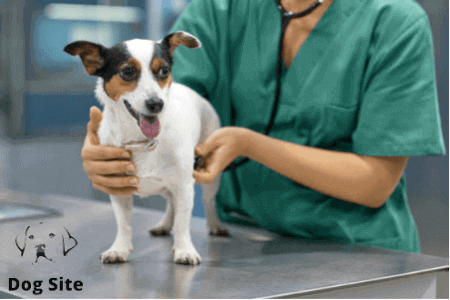
In order to keep health problems in your dog from getting serious, you need to detect them early. Therefore, it is necessary to give your dog a basic check-up about once a week. This check-up takes no more than a few minutes, and it can help prevent problems as well as expenses down the road.
Start with a body rub. This makes your pet comfortable. While giving him his rub, check for any signs of flaking or scabs which can be a sign of parasites, a skin disorder, or allergies.
Also check for any lumps and bumps. Although they are a normal part of aging in dogs, they can also be a symptom that there is something wrong. Check for any swelling that could indicate parasites, heart trouble, or cancer.
His breathing should be smooth and quiet, unless he is panting. If his breathing is raspy or rattling, he could have a respiratory problem.
Your dog’s heartbeat should be regular and strong. To check for his pulse, place your hand against his chest by his left elbow. Count the number of beats in 15 seconds and multiply it by four. The rate should range between 60 and 160.
Lastly, examine his ears, eyes, and mouth and check for any signs of abnormalities .